How Often Should You Water 2-Week-Old Sod in Maitland?
Week two is when new sod stops living on surface moisture and starts pushing roots into the soil, so the watering has to change with it.
How often should you water 2 week old sod?
At two weeks, most new sod needs one deep watering a day, in the early morning, instead of the several light sprinklings it got in week one. Aim to wet the soil two to three inches below the sod pad. Once a corner resists a gentle tug, start stretching to every other day.
Why the schedule changes at week two
Freshly cut sod arrives with roots trimmed to well under an inch. In the first week those short roots sit in the thin layer of soil attached to the pad, so the pad has to stay damp almost constantly, which is why week one usually means two or three short cycles a day.
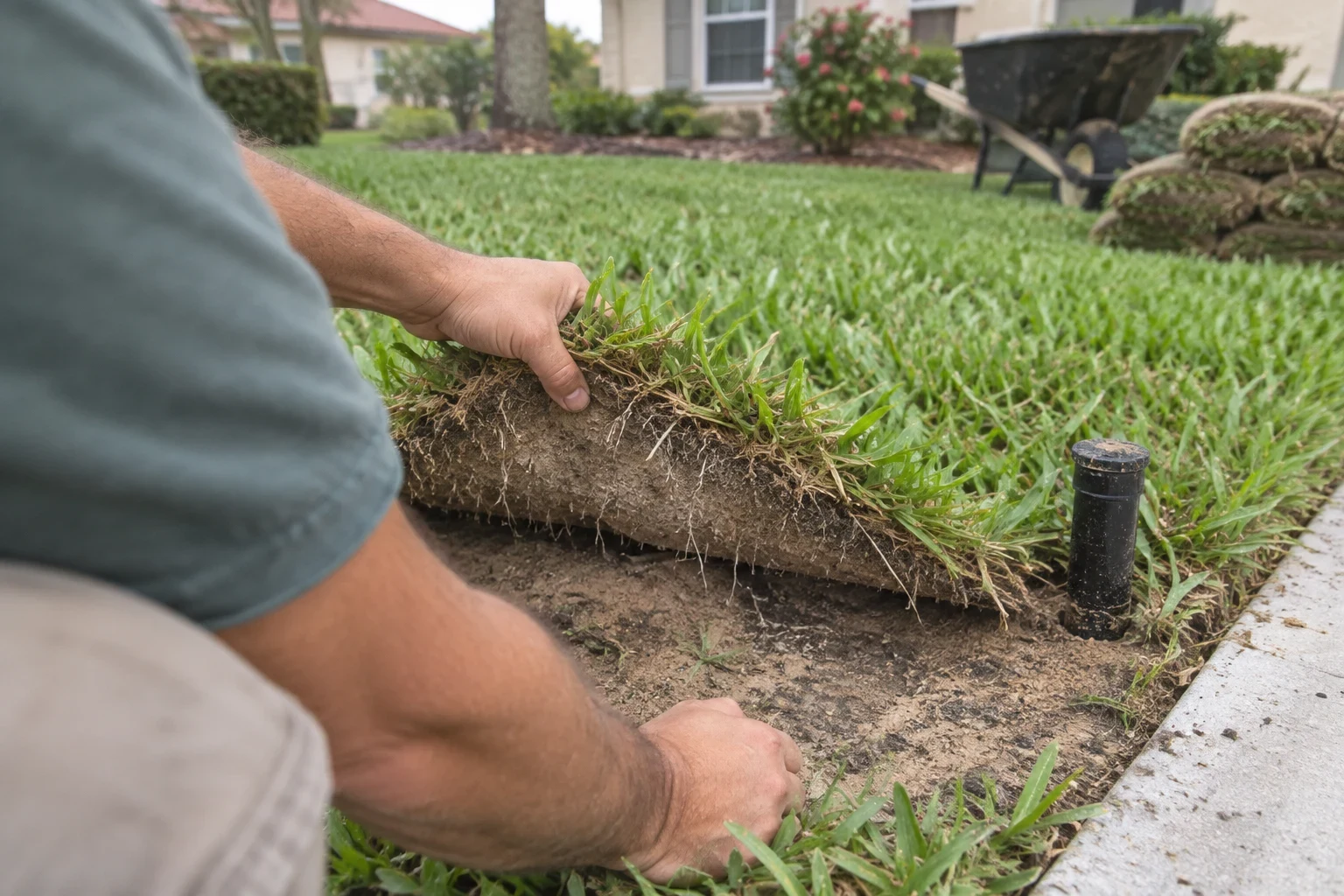
By day ten to fourteen, new white root tips are growing down out of the pad and into the ground below it. Those roots follow moisture. If you keep watering lightly and often, the water stays in the top inch and the roots stay there too. Fewer, deeper waterings pull them downward, and a deeper root system is what lets the lawn survive a dry week in May without browning.
Sandy soil makes this more urgent. Most yards around Maitland sit on fast-draining sand that holds little water, so a shallow-rooted lawn dries out within a day of missing a cycle.
A practical week-two watering routine
Run one cycle a day, starting between roughly 4 and 8 in the morning. Early watering soaks in before the sun and wind pull it away, and the grass blades dry off during the day. Evening and overnight watering leave the leaves wet for hours, which is how fungal diseases like brown patch and gray leaf spot get started in St. Augustine grass.
How long to run each zone depends on your sprinkler heads, not a fixed number of minutes. Rotor heads put down water slowly and need longer run times than spray heads. The simple way to set it is to run a zone, wait half an hour, then check the soil under the sod and adjust.
- Push a long screwdriver into the lawn after watering. It should slide in easily two to three inches deep.
- Lift a corner of a sod piece. The soil underneath should feel moist like a wrung-out sponge, not soupy.
- Check the seams and the edges along driveways and sidewalks first. Those strips dry fastest because concrete holds heat.
- Look at areas the sprinklers barely reach. Hand-water those spots rather than running the whole zone longer.
- On a day with a solid afternoon thunderstorm, you can skip the next morning cycle if the soil is still damp at depth.
How to tell if you are watering too much or too little
Underwatered sod shows it at the edges first. The seams between pieces open up, the pads shrink, and the blades take on a dull blue-gray color and start to fold or curl lengthwise. If you see gaps forming, add a second short cycle in the early afternoon for a few days and check that every head is popping up and turning.
Overwatering is just as common at this stage and does its own damage. The lawn feels spongy underfoot, water puddles in low spots, mushrooms appear, and roots stop growing because saturated soil has no air in it. Yellowing pads with a sour smell usually mean too much water, not too little. Cut the run time back and let the surface dry slightly between cycles.
Uneven results across the yard usually point to the system rather than the schedule. A clogged nozzle, a tilted head or a zone with mixed rotors and sprays will leave dry stripes next to soggy ones. Our irrigation service checks coverage head by head and resets the controller so new sod gets even water.
When to cut back, and when to mow for the first time
Do the tug test every few days. Grab a few blades near the middle of a sod piece and pull gently. If the pad lifts, keep watering daily. If it holds firm, the roots have anchored and you can move to every other day, then toward a normal two-day-a-week schedule over the next couple of weeks.
Most lawns get their first mow around two to three weeks, once the pads are rooted and you can walk on them without leaving footprints. Skip the morning watering that day so the ground is firm. Wet, freshly laid sod is slippery, and a mower wheel that slides can tear a pad loose or put your foot in the path of the deck. Set the mower high, keep the blade sharp, and remove no more than a third of the blade height.
Watering rules matter here too. Central Florida water management rules generally allow extra watering during an establishment period for new sod, then return you to the regular schedule. Confirm the current rules with the city before you set the controller, so the timer does not keep running daily after the allowance ends.
More questions about new sod
- Can I walk on sod at two weeks?
- Keep foot traffic light until it passes the tug test. Walking on soft, wet sod presses footprints into it and can shift pads, and the surface is slick for kids and pets, so it helps to keep play off the new lawn for another week or two.
- Should I fertilize 2-week-old sod?
- Usually not yet. New sod is grown with nutrients already in the pad, and fertilizer on unrooted grass can burn it or wash through sandy soil. We typically wait until the lawn is rooted and has been mowed a couple of times.
- Does rain count as watering for new sod?
- It does if it soaks in deeply. A brief shower often wets only the leaves, so check the soil with a screwdriver before skipping a cycle. A rain sensor on your controller helps avoid watering right after a heavy storm.
- What if my sod still lifts up at three weeks?
- That usually means the soil underneath stayed too wet or too dry, or the pads were laid on loose fill. Call us and we can look at the soil, the grade and your sprinkler coverage before the lawn loses more ground.

Get your new lawn rooted the right way
We lay sod on graded, prepared soil and set your sprinkler zones to match it, so the roots get even water from day one. A call gets you a free estimate, or an on-site walkthrough of a struggling new lawn where we check the pads, the soil underneath and every sprinkler head.