ServicesMulch and Beds
Mulch and Bed Installation in Maitland
We clear out weeds and old breakdown, cut a crisp edge, and lay fresh mulch or pine straw at a depth that holds moisture without smothering roots. Before any spade goes in, we mark irrigation lines and lighting wire so nothing gets cut.
What Good Bed Work Actually Does
Mulch is not decoration. A 2 to 3 inch layer keeps sandy soil from drying out between waterings, shades out weed seed, and slows the soil temperature swings that stress shrub roots. Too thin and weeds push through in weeks. Too thick, or piled against stems, and it holds water against bark, which invites rot and fungus.
Most of the beds we see around your home have one of two problems. Either old mulch has been topped up year after year until it sits above the slab and against the siding, or it has washed away in summer storms and left bare soil. We fix both by resetting the bed, not just dumping more material on top.
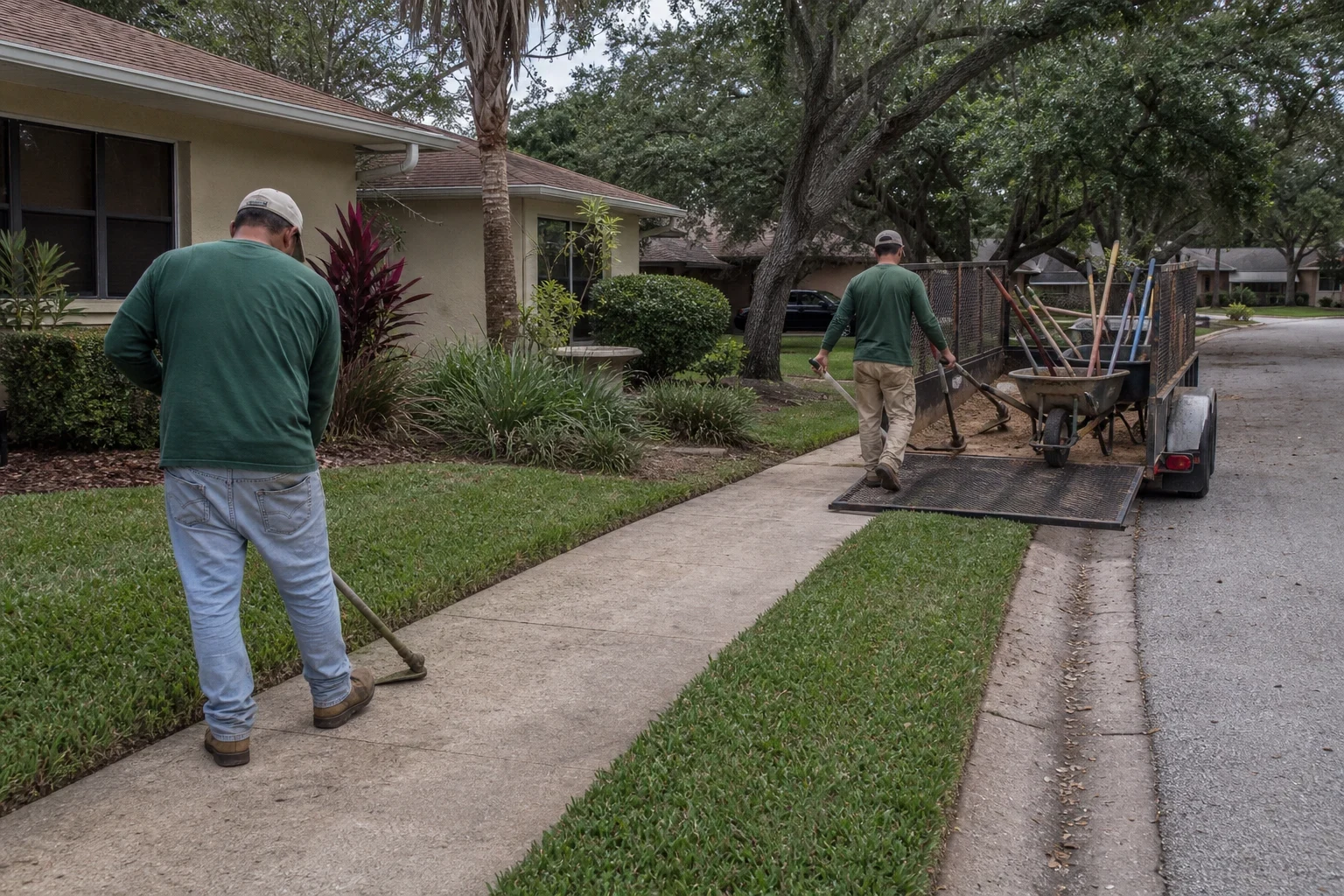
We also treat a bed as a work area your family uses. Edging spades, string trimmers and wheelbarrows all come with hazards, so we set the job up to keep kids, pets and buried lines out of harm's way.
What's Included in a Bed Refresh
- Line and wire locating
- We flag sprinkler heads, drip tubing and low-voltage lighting cable before edging. A cut lateral line can flood a bed and waste water for weeks before anyone notices.
- Weeds pulled by the root
- We remove weeds with their roots and runners, including nutsedge and torpedograss, rather than mowing them flat. Hand pulling near plants means no stray herbicide drift onto your shrubs.
- Old mulch thinned or removed
- Decomposed mulch that has built up past 3 inches gets raked out. We pull material back from the foundation so it no longer bridges onto siding, where it holds moisture and gives pests a path.
- Clean spade-cut edges
- A vertical edge about 3 inches deep keeps grass runners from creeping into the bed and holds mulch in place during heavy rain.
- Fresh mulch or pine straw
- We spread pine bark, cypress, hardwood or pine straw at a consistent depth. Each tree and shrub gets a ring of bare soil around its base instead of a mulch volcano.
- Cleanup
- We blow walks and driveways clear and haul away weeds and old material, so there is no loose mulch left on slick concrete.
Signs Your Beds Need Attention
Mulch touching the siding
If mulch sits against stucco, wood trim or above the top of the slab, it is holding moisture where you don't want it. That needs resetting, not another layer.
Weeds coming back fast
Weeds returning within a few weeks of pulling usually mean the mulch is too thin or the roots were never removed.
Bare soil after storms
Washouts along downspouts and slopes show that the material is too light for the spot or the edge is not holding it.
Mounds around tree trunks
Mulch piled up the trunk keeps bark wet and can lead to decay and girdling roots. The root flare should be visible.
Gray, matted surface
Mulch that has crusted over can shed water instead of letting it soak in, so your plants go thirsty even when the sprinklers run.
What Sets the Price of Mulch and Bed Work
Your quote comes down to how much bed area you have and how much prep it takes before new material goes down. We write it out line by line so you can see where each part of the cost comes from. When bed work is one piece of a bigger landscape project, you can spread the cost with financing of up to $100,000, choosing a term anywhere from 2 to 12 years, and there is no penalty for paying it off early.
Square footage and depth
Bed area times target depth sets how many cubic yards or bales we bring. Beds that are bare need more than ones that only need a top-up.
Material type
Pine straw, pine bark, cypress and hardwood are priced differently and break down at different rates, which affects how often you'll need to redo them.
Removal and weed load
Hauling off thick old mulch or clearing heavy grass invasion takes more labor than a light refresh.
Access
Backyards reached only through a narrow gate mean more wheelbarrow trips, which adds time.
How a Mulch and Bed Day Runs
- 1
Walkthrough and material choice
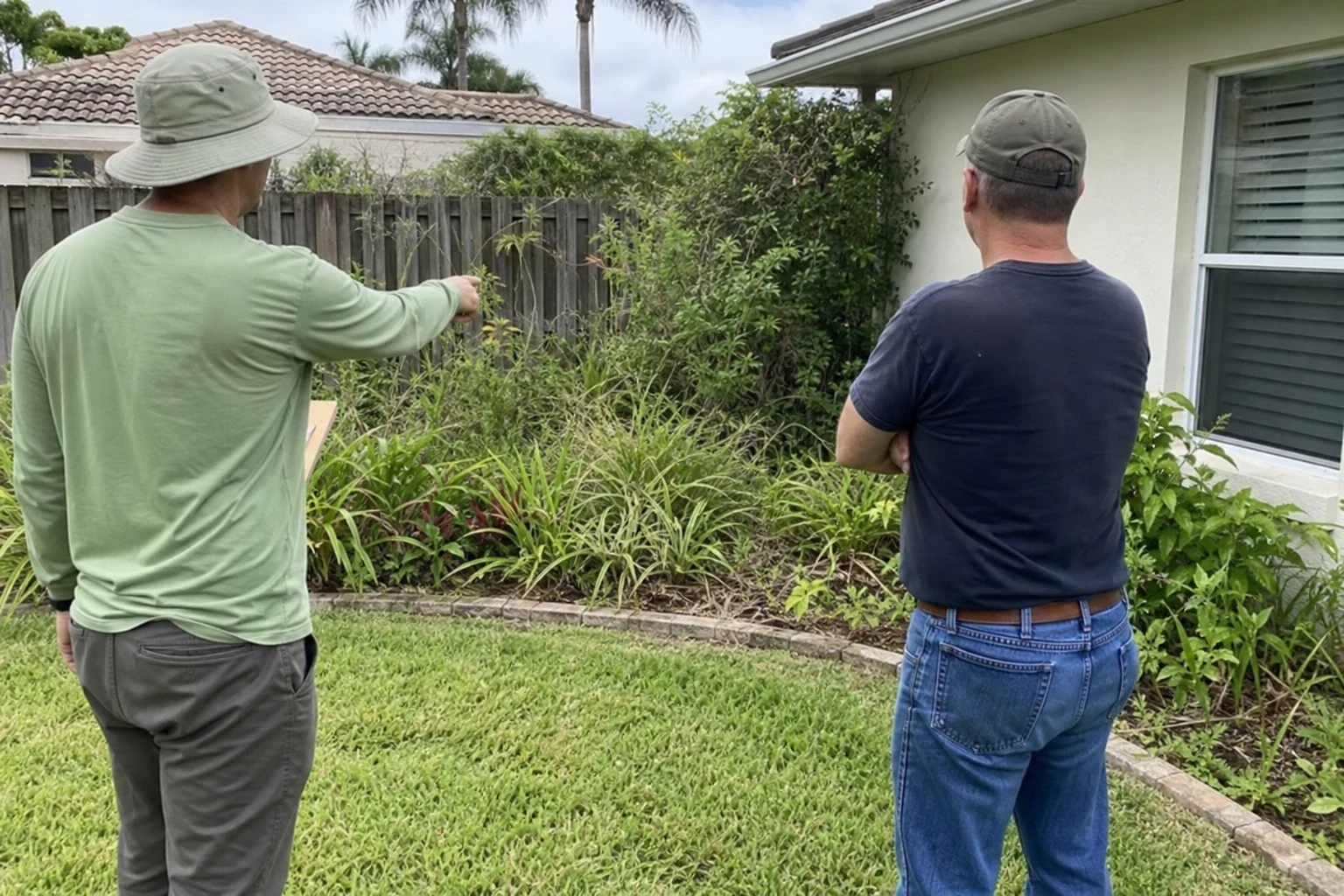
On a free estimate visit we measure the beds, check depth and drainage, and talk through mulch types. Pine bark nuggets look good but can float in a downpour, so on slopes we may suggest shredded material or pine straw.
- 2
Site setup
We mark buried lines, set wheelbarrow paths that protect your lawn, and ask that kids and pets stay inside while trimmers and edgers are running.
- 3
Clear, edge and prep
Weeds and excess old mulch come out first, then we cut the edge. If you choose landscape fabric, it goes down now, but we often skip it under mulch because it traps a layer of weeds on top as the mulch breaks down.
- 4
Spread and finish
Mulch goes down evenly, pulled back from trunks and the foundation. We clean hard surfaces and walk the beds with you before we leave.
Mulch and Bed Questions
Should I use pine straw or bark mulch?
Pine straw knits together and stays put on slopes and in heavy rain. Bark looks tidier and lasts longer on flat beds. We'll recommend one based on where each bed sits and how water moves through it.
Does mulch attract termites?
Mulch doesn't draw termites from far away, but a damp layer against the foundation gives them cover and moisture. That's why we keep material pulled back from siding and the slab edge.
How often do beds need fresh mulch?
Most organic mulch needs a top-up about once a year in our heat and humidity. Pine straw tends to fade and thin a little sooner. We check depth first so we don't stack new mulch on old.
Will edging damage my sprinklers?
Not if the lines are found first. We flag heads and tubing before we cut, and if a bed also needs zone or head adjustments, our irrigation service can handle it.
Can you add new beds or plants?
Yes. For new bed shapes and plant layouts, our landscape design service plans the beds first, then we install and mulch them.

Ready for Cleaner, Safer Beds
We'll come out, measure your beds and tell you plainly whether they need a top-up or a full reset. The estimate is free.