ServicesStump Grinding
Stump Grinding in Maitland
An old stump trips people, chews up mower blades and feeds termites as it rots. We grind it out below the soil line, keep chips and debris contained while the wheel turns, and leave you a level spot ready for grass or a new bed.
What Stump Grinding Does and When It Makes Sense
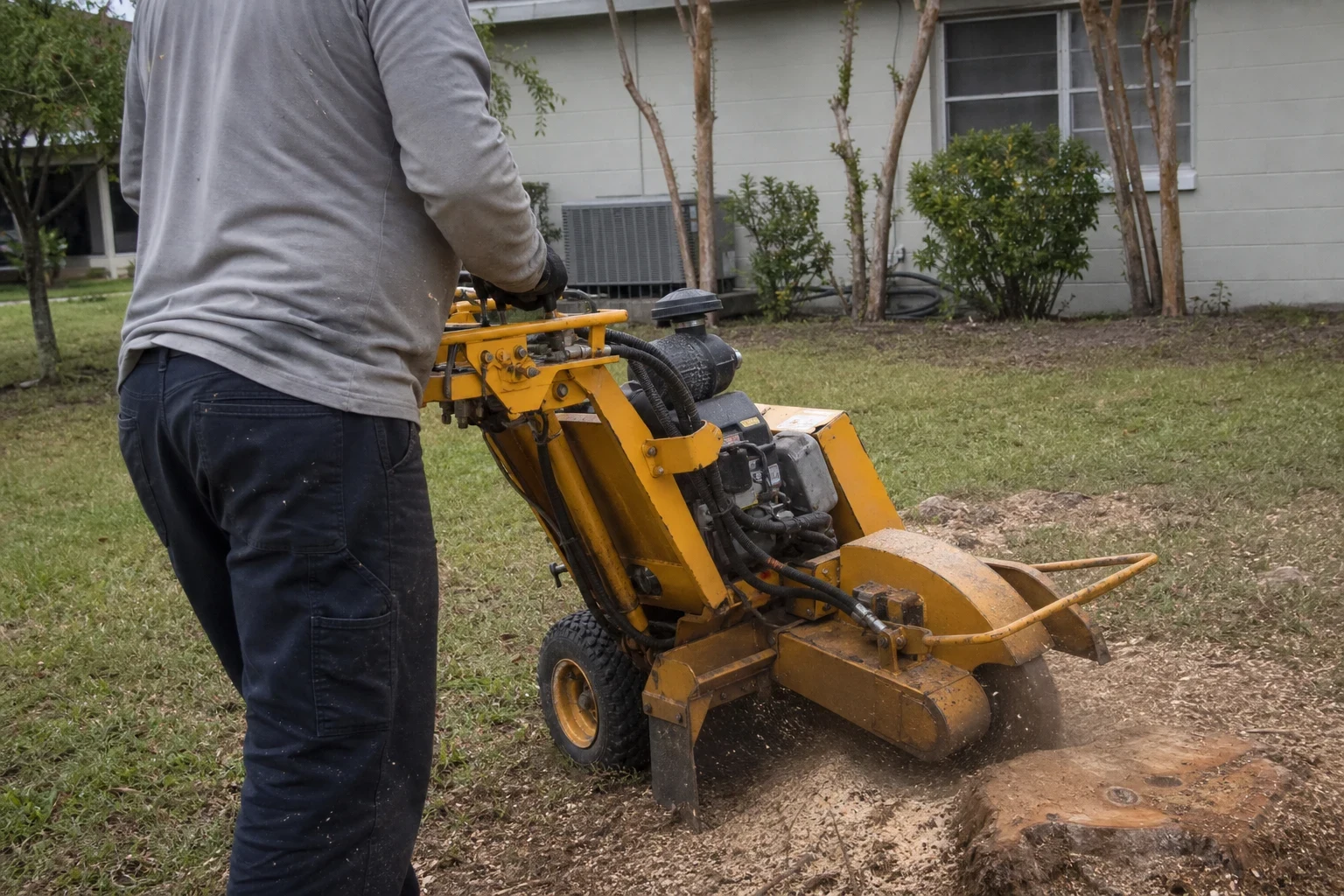
A stump grinder is a heavy cutting wheel fitted with carbide teeth. We sweep it side to side across the stump, shaving the wood into chips a few inches at a time until the trunk and the main root flare are gone well below grade. Unlike pulling a stump with a machine, grinding leaves the surrounding soil, sprinkler lines and nearby plantings mostly undisturbed.
Grinding is the right call when a tree is already down and you want the ground back. It is usually the faster, less destructive option compared with excavating. The roots left deep in the soil break down slowly over the following years, and in most yards that is not a problem once the top is gone.
Spinning steel at that speed throws wood and stone hard, so the way we set up matters as much as the grinding itself. That is where most of our attention goes on the job.
What's Included When We Grind a Stump
Utility locate before we cut
Florida requires a locate request through the 811 call-before-you-dig system before digging, and grinding counts. We make that request so gas, electric and cable lines are flagged before any teeth touch the soil.
Irrigation and hazard check
We probe around the stump for shallow sprinkler pipe, low-voltage lighting wire and buried rocks. Anything we find gets marked so the wheel can be steered around it or the line can be capped.
Grinding below grade
We take the stump down several inches below the soil surface, deeper where you plan to plant. Surface roots running toward the lawn are ground out along their length so they stop lifting the turf.
Chip handling and backfill
Grindings are mostly wood with some soil mixed in. We can rake them back into the hole, haul them off, or remove them and backfill with topsoil, which settles more evenly and grows grass better.
Cleanup of the work zone
Chips get blown off walks, driveways and pool decks, and the shields come down only after the area is clear.
Signs a Stump Should Come Out
- Someone has already tripped on it
- Low stumps and raised roots hide in grass, especially at dusk. If a child, guest or older family member has caught a foot on one, it is time.
- Termites or mushrooms around the base
- Rotting wood is food for subterranean termites and fungi. A decaying stump close to your home gives termites a staging point a few feet from the foundation.
- New shoots from the old trunk
- Laurel oaks, camphor trees and some other hardwoods push suckers from the stump for years. Grinding below the root collar removes the tissue that keeps sprouting.
- Mower damage or bare patches
- Bent blades and scalped turf around a stump mean the roots sit at mowing height. Grinding them out lets you mow straight across.
- A planned project needs the space
- A new patio, bed or sod area cannot go in over a stump. We often grind before hardscape installation or sod installation work starts.
How the Work Goes on Grinding Day
- 1
Walk the site with you
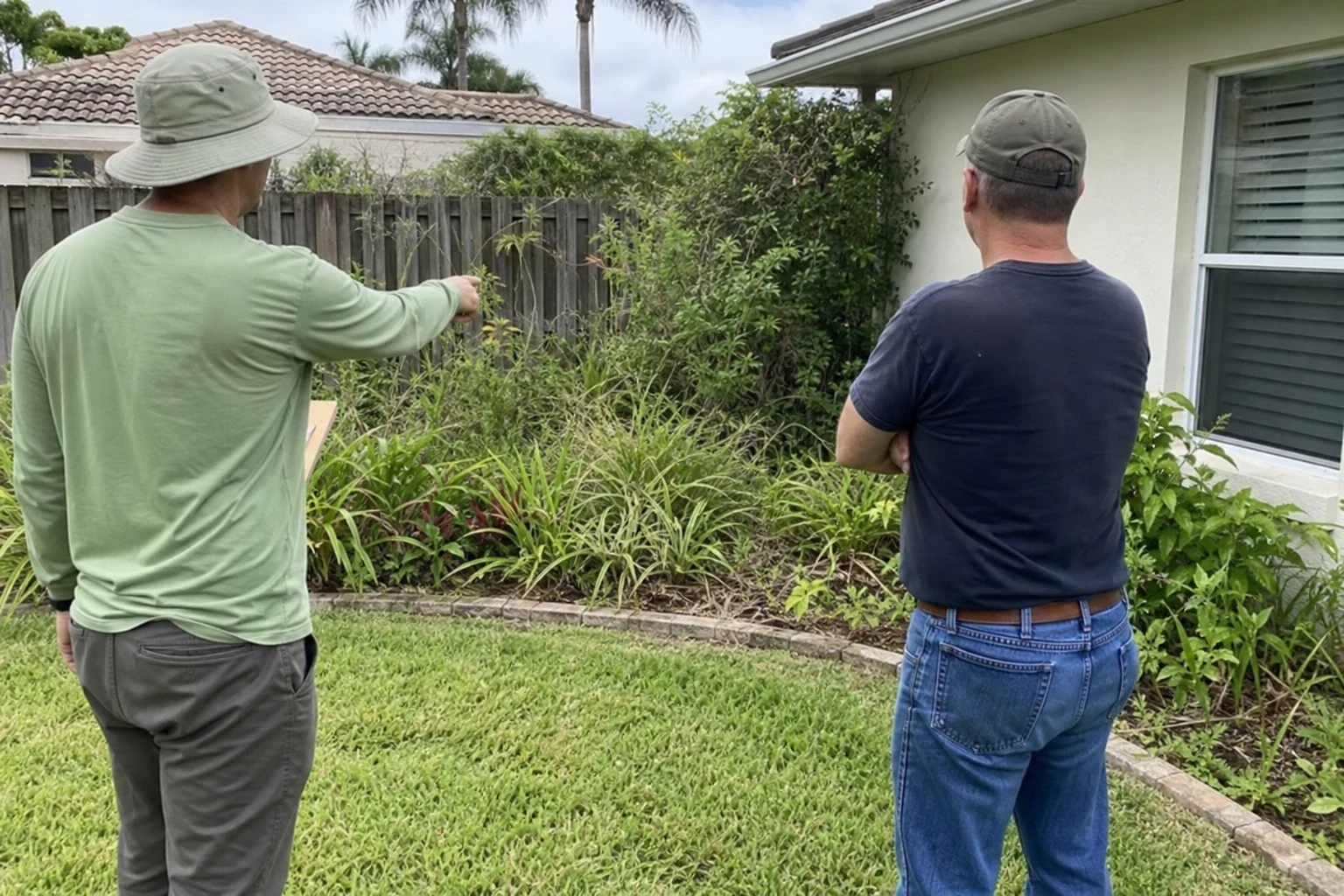
We confirm which stumps come out, how deep to go and what you want done with the chips. We also check gate width, because a narrow side gate decides which grinder can reach the backyard.
- 2
Set the safety zone
Debris shields go up between the stump and windows, cars, screen enclosures and the pool. We ask that children and pets stay inside until we finish, since chips can fly a long way.
- 3
Grind the stump and roots
The operator works the wheel in passes, checking depth as the hole opens. Surface roots get followed out and cut down so nothing is left at trip height.
- 4
Backfill and clean up
We fill the hole with grindings or topsoil, tamp it, and clear hard surfaces. You get a level spot, with a short note on how much settling to expect as buried roots decay.
What Affects the Price of Stump Grinding
Stump grinding is priced by the job after we see it, not from a chart. The main driver is how much wood the wheel has to chew through and how easily we can get the machine to it. We give you the number on site, before any work begins.
- Diameter and root flare
- We measure across the stump at ground level, including the flared base. A wide flare with thick buttress roots takes much longer than a straight trunk of the same height.
- Wood type and age
- Live oak is dense and slow to grind. A stump that has sat for a few years may be softer from rot, while a fresh-cut hardwood is at its toughest.
- Access to the stump
- A stump behind a fence, on a slope or wedged against a slab, wall or utility line needs a smaller machine and more careful work around it.
- Number of stumps
- Several stumps on one visit cost less each than a single stump, since setup and the safety zone are handled once.
- Chip removal and topsoil
- Leaving grindings in place costs least. Hauling them away and backfilling with clean topsoil adds material and labor, but gives a better base for grass.
Stump Grinding Questions
- How deep do you grind the stump?
- We grind several inches below grade for lawn areas and go deeper where you plan to set a shrub or tree. Tell us what is going in that spot and we will set the depth for it. Roots deeper than that stay in the ground and decay over time.
- Will the hole sink later?
- Some settling is normal as the remaining roots rot, more so if the hole is filled only with wood chips. Backfilling with topsoil reduces it. If a low spot appears, a little extra soil and some seed or sod levels it out.
- Can you grind a palm stump?
- Yes. Palm trunks are fibrous rather than woody, so they grind differently but come out cleanly. Palms do not resprout from the stump, so grinding is mostly about the trip hazard and reclaiming the space. Our palm tree pruning and removal page covers taking the tree down first.
- Do I need to be home during grinding?
- Not necessarily, as long as gates are unlocked and pets are secured indoors. We do ask that no one stands near the work zone while the wheel is running. We walk the area with you first if you want to be there.
- Can you take the tree down too?
- Yes. Our tree trimming and removal service handles the felling, and we can grind the stump on the same project. For bigger combined jobs, we offer financing of up to $100,000, with terms anywhere from two to twelve years and no penalty if you pay the balance off early.
Get That Stump Out of Your Yard
Tell us how many stumps you have and where they sit. We will come look, check for buried lines and give you a clear price before we start.