ServicesHardscape Installation
Hardscape Installation in Maitland
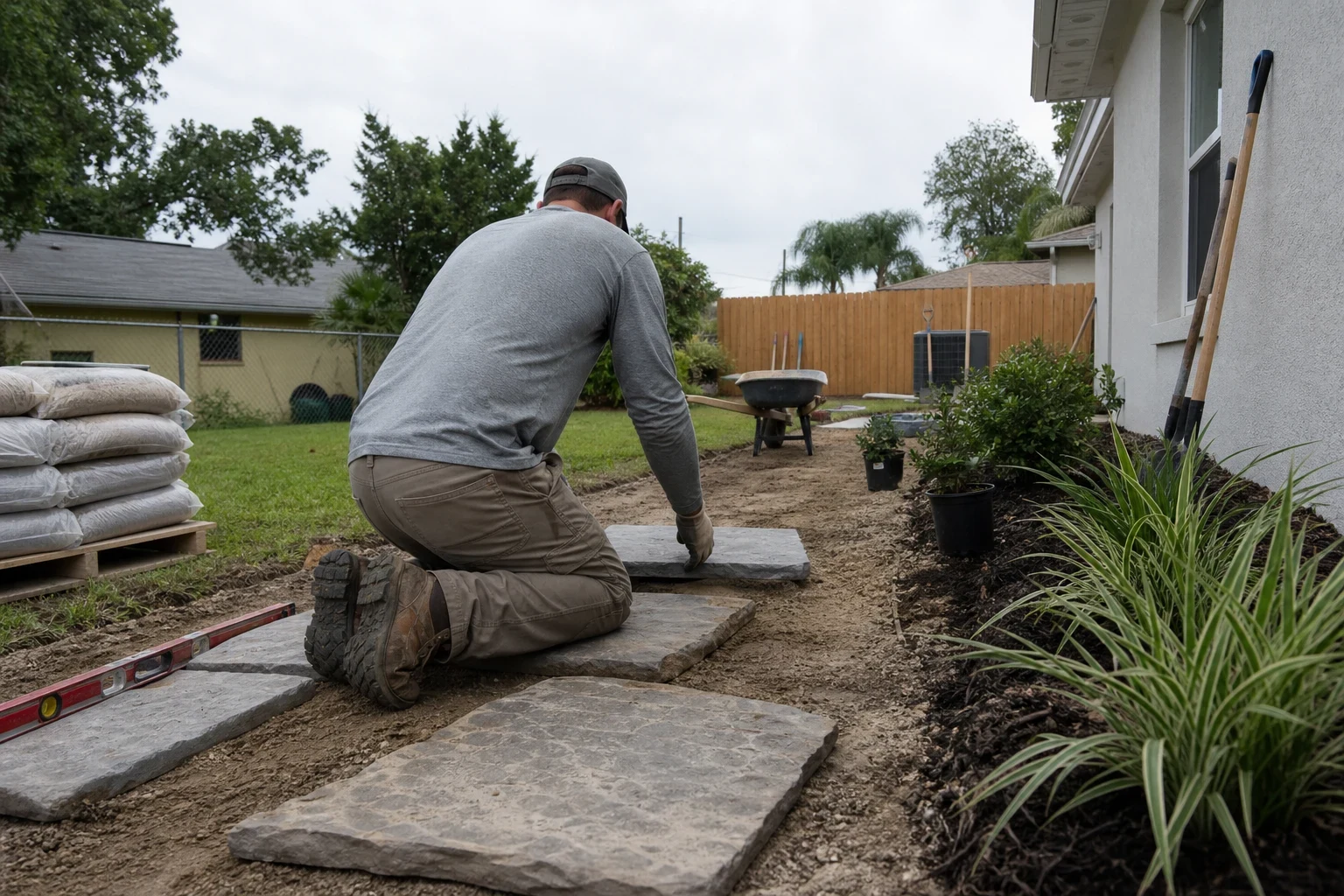
We build paver patios, walkways, driveway borders and retaining walls on a properly compacted base, sloped to shed water and edged so pavers stay put. Utilities are marked before we dig, and the work zone is kept safe for your family while we build.
Hardscape that stays level, drains and is safe to walk on
Hardscape is the built part of your yard: the patio, the walkway to the front door, the steps, the retaining wall holding back a slope. Most failures we see, like sunken pavers, wobbly steps and walls that lean, start below the surface. The base was too thin, it was never compacted in lifts, or water had nowhere to go.
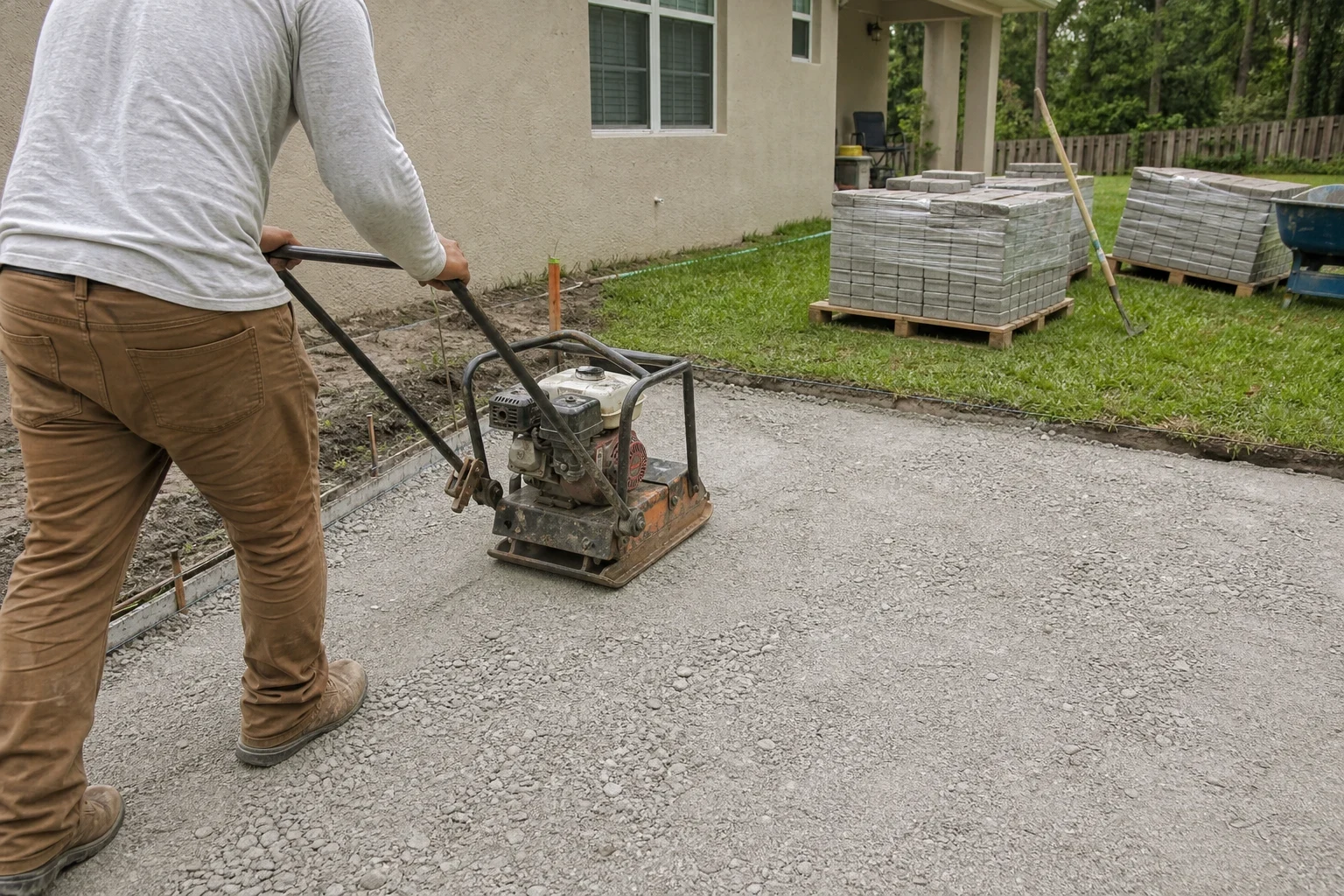
Our sandy soil drains fast but shifts when it is washed out, so a summer downpour can undermine a patio that was laid straight onto loose sand. We dig to firm subgrade, then build up a crushed aggregate base and compact it in layers with a plate compactor before a single paver goes down.
The result is a surface without trip edges, with joints locked and a slope that moves water away from your home's foundation. If you are still deciding on layout and plantings around it, our landscape design work can plan the whole space first.
What our hardscape installation includes
- 01
Paver patios and pool-adjacent areas
Concrete or travertine pavers set on a compacted base and a screeded bedding sand layer. Near pools we favor textured, slip-resistant surfaces and confirm the slope carries water away from the deck edge.
- 02
Walkways and steps
Paths sized for two people to pass, with consistent step rise and tread depth. Uneven risers are a common cause of falls, so we measure and set each step to match the others.
- 03
Segmental retaining walls
Interlocking block walls with a compacted leveling pad, clean drainage stone behind the block and a perforated drain pipe at the base. On taller walls we add layers of geogrid into the backfill, tying the block to the soil mass behind it so the load cannot tip the wall outward.
- 04
Perimeter restraint and polymeric joints
We stake a restraint along the outside of each patio or path so the outer pavers cannot drift and open gaps. Polymeric sand is then swept into the joints and misted with water, and it hardens to resist washout and weed growth.
- 05
Fire pit pads and seating walls
We build fire features on non-combustible bases and set them a safe distance from your home, fences and overhanging limbs.
Questions about Hardscape Installation?
Call(407) 305-7395Signs it is time for new hardscape
Pavers that rock or have sunk
Low spots and loose pavers mean the base has settled or washed out. Resetting the top layer alone rarely lasts; the base underneath needs rebuilding.
Water pooling against your home
A patio sloped toward the house sends rain to the foundation and slab edge. Rebuilding with the correct fall fixes the cause instead of the symptom.
A retaining wall that leans or bulges
Leaning block usually means water pressure has built up behind a wall with no drainage stone or pipe. A failing wall is a safety concern, especially near play areas, and should be addressed before it gives way.
Cracked concrete with lifted edges
Raised slab edges and heaved sections from roots are trip hazards for kids and older family members. Replacing them with pavers allows future spot repairs without breaking up the whole surface.
A slope you cannot safely mow
A steep grade is hard on equipment and footing. Terracing it with a low wall creates flat, usable ground.
How a hardscape job runs
- 1
Walkthrough and free estimate
We measure the area, check grade with a level line, note tree roots and drainage paths, and talk through materials. You get a written estimate that lists base depth, materials and labor separately.
- 2
Utility locates and permits
Before any digging we request utility locates through Florida's 811 system and wait for the lines to be marked. If your project needs a permit, such as some taller retaining walls, we handle the application.
- 3
Excavation and base
We dig out to firm soil, lay geotextile fabric where the subgrade is soft, and compact crushed aggregate in lifts. The work area is fenced off or flagged so children and pets stay clear of open excavation and machinery.
- 4
Laying, cutting and locking
Pavers go down on screeded bedding sand. Cuts are made with wet saws or dust-controlled equipment to keep silica dust out of the air around your home, then the field is compacted and joints are filled and set.
- 5
Cleanup and walk-through
We haul off excavated soil and offcuts, blow down surfaces and walk the finished area with you, pointing out how long to keep traffic off fresh polymeric sand.
What affects the cost of hardscape
Hardscape pricing depends mostly on what you cannot see when it is done: how much digging and base the site needs. Your written estimate breaks out base, materials and labor on separate lines, and we go over each one with you. For larger builds we offer financing up to $100,000 on 2–12-year terms, no prepayment penalties, and we are glad to explain how it works during your call.
- Excavation and base depth
- A walkway needs less base than a driveway border that carries vehicles. Soft or root-filled soil means more digging and more aggregate.
- Footprint and paver pattern
- A bigger patio takes more pavers, more base stone and more hours behind the compactor. Curved edges and herringbone or multi-size layouts call for far more saw cuts than a straight running bond, which adds time on the job.
- Materials
- Standard concrete pavers, travertine and wall block differ in cost and in how they handle heat and foot traffic.
- Access
- Tight side yards where materials must be moved by hand, or removal of old concrete first, add labor and hauling.
- Wall height and drainage
- Taller retaining walls need geogrid, more drainage stone and sometimes a permit, all of which add to the scope.
Hardscape installation questions
How long before we can use the new patio?
Foot traffic is usually fine once the polymeric sand has cured, which typically takes a day or so of dry weather. We tell you the exact timing based on the product and the forecast. Furniture and grills can go back after that.
Will the pavers get too hot to walk on barefoot?
Darker pavers absorb more sun and get hotter. Lighter colors and travertine stay noticeably cooler, which matters around pools and play areas. We bring samples to the estimate so you can compare.
Do you check for underground lines before digging?
Yes, every time. We request utility locates through 811 and wait until lines are marked. We also ask about private lines that 811 does not mark, like irrigation pipes and landscape lighting, and plan around them.
What happens to my sprinkler system during the work?
We locate sprinkler lines and heads in the work area before excavation. If lines need to be rerouted around the new hardscape, our irrigation service can handle it so coverage stays even.
Can you repair an existing patio instead of replacing it?
Often, yes. If the base is sound and only a section has settled, we can lift those pavers, rebuild the base beneath and relay them. If the problem runs across the whole patio, we will tell you plainly that a rebuild makes more sense.
Plan a patio or wall built to last
We will walk your yard, check grade and drainage, and give you a written estimate with the base and materials spelled out. The estimate is free.