ServicesSeasonal Cleanup
Seasonal Cleanup in Maitland
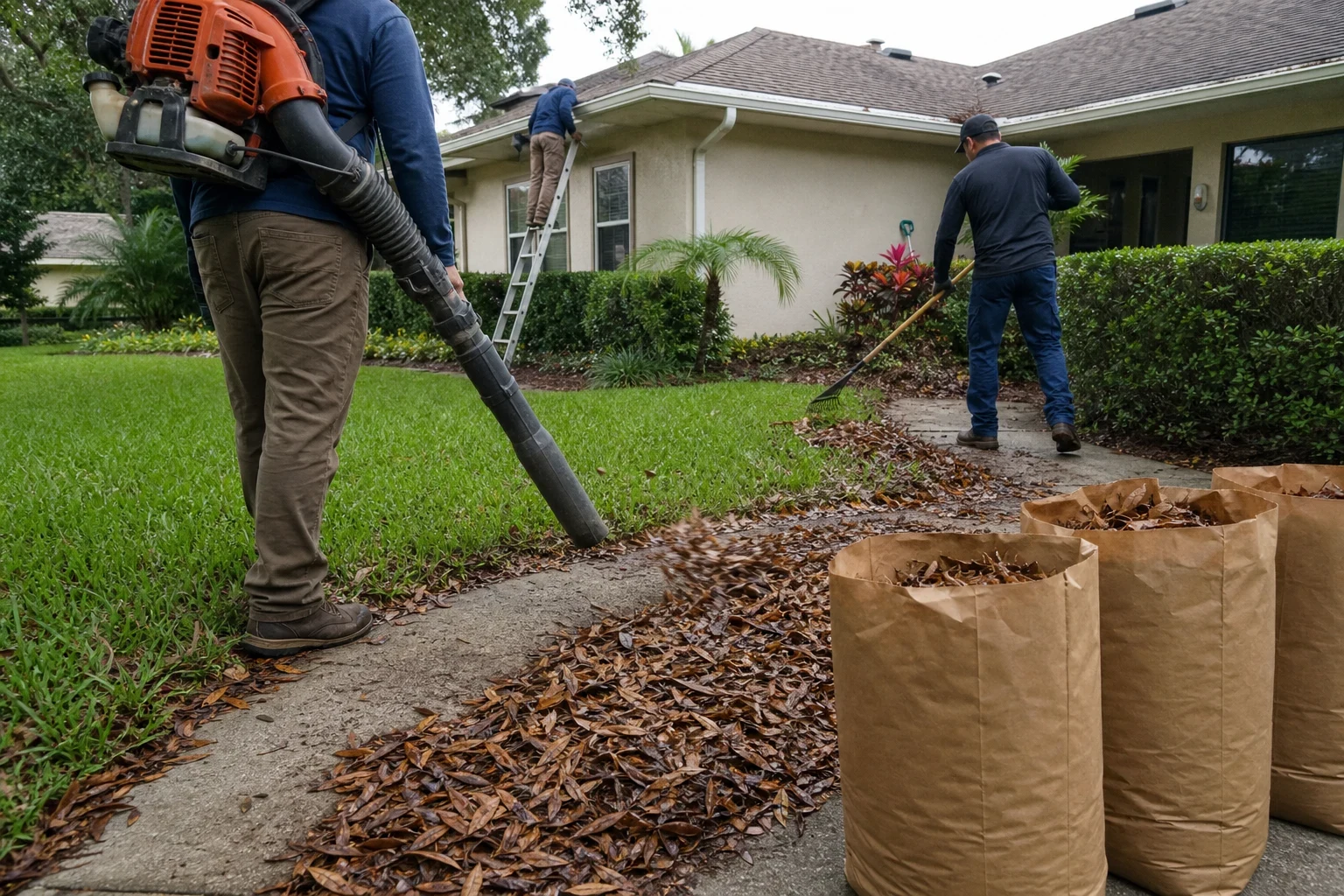
We clear the buildup each season leaves behind: matted oak leaves, freeze-browned shrubs, loose limbs and overgrown edges. Before anyone starts a blower or a trimmer, we walk the yard for fire ant mounds, buried sprinkler heads and lighting cables, so the work stays safe for your family and your pets.
What Seasonal Cleanup Covers and When It Makes Sense
Central Florida does not have one fall leaf season. Live oaks drop most of their old leaves in late winter, then shed pollen tassels into early spring. A cold snap can brown hibiscus, ixora and other tropicals overnight. Summer storms knock down twigs and dead palm fronds. Each of these leaves a different kind of mess, and each needs a different kind of cleanup.
Leaves left in place for weeks pack into a wet mat. On St. Augustine grass, that mat blocks light and holds moisture against the blades, which invites brown patch and thins the turf. On pavers and walkways it turns slick underfoot. In beds it hides the edges of the mulch line and gives fire ants a covered place to build.
A seasonal cleanup is the right call when the yard is basically healthy but needs a reset. If the property has gone years without care, with vines, overgrown shrubs or bulk debris, our property cleanup service is the better fit.
What We Do During a Seasonal Cleanup
- 01
Leaf and tassel removal
We rake and blow leaves out of beds, turf, walkways and patio corners, then bag or haul them off. Oak tassels get pulled from paver joints, where they stain and hold moisture.
- 02
Freeze-damage pruning
We cut cold-damaged growth back to live, green tissue once the risk of another frost has passed. Pruning too early exposes tender new growth to the next cold night, so we time this cut on purpose.
- 03
Bed and edge reset
We pull weeds by the root, re-cut bed lines and edge along driveways and sidewalks. If the mulch has thinned below about two inches, we note it so you can decide on a top-up through our mulch and beds service.
- 04
Pre-storm debris check
Before storm season we remove fallen limbs, dead fronds within reach and loose items that a strong gust could throw. Anything high or heavy gets referred to our tree trimming and removal or palm tree pruning and removal crews.
- 05
Sprinkler head clearing
Debris piles over spray heads and rotors and deflects the pattern. We clear around each head we find and tell you about any that look cracked or tilted.
Questions about Seasonal Cleanup?
Call(407) 305-7395Signs Your Yard Is Due for a Cleanup
Leaves have matted on the lawn
If you lift a patch of leaves and the grass underneath is yellow or pale, light has been blocked for too long. The sooner it is cleared, the faster the turf recovers.
Walkways feel slippery
Wet leaves and oak tassels on pavers or concrete make a slick film. That is a fall risk for anyone carrying groceries or for older family members.
Shrubs are brown after a cold night
Crisp, brown leaves on tropicals after a freeze mean dead tissue. Left in place, it can harbor fungus and makes the plant look dead even when the roots are fine.
Bed edges have disappeared
When grass creeps into beds and mulch spills onto the lawn, weeds take hold in the gap. A clean edge is easier to maintain than a blurred one.
Fire ant mounds keep popping up
Ants favor loose, sheltered debris piles. Removing the cover makes mounds easier to spot and treat, and reduces surprise stings in the yard.
How a Cleanup Day Runs
- 1
Walkthrough and hazard check
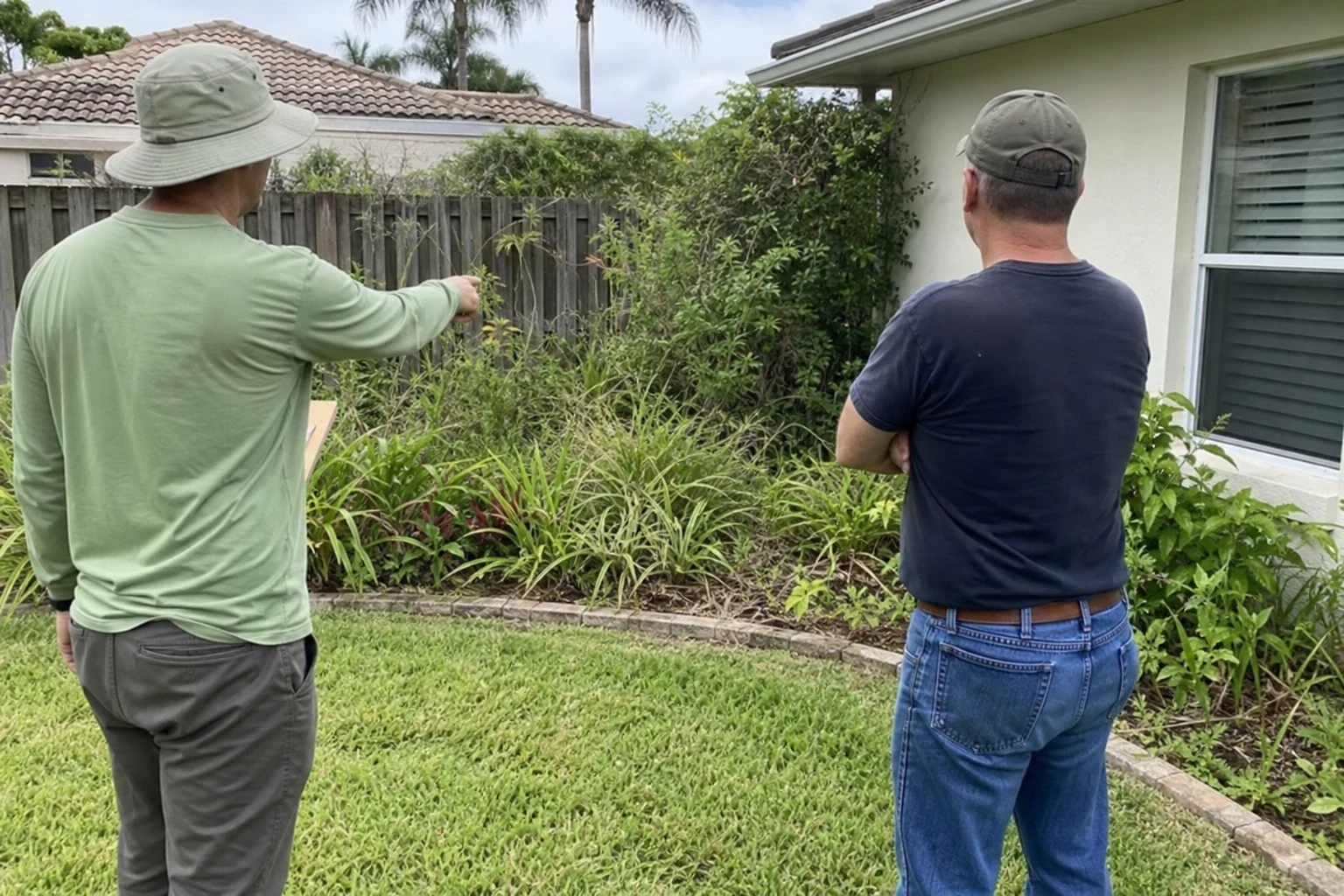
We walk the property with you, or on our own if you prefer, and flag fire ant mounds, wasp nests, low-voltage lighting cables, hose bibs and buried sprinkler heads. We agree on what stays, what goes and where pets and kids should be while we work.
- 2
Set up a safe work zone
Crew members wear eye and hearing protection. Blowers are aimed away from windows, cars, the pool and open doors, and we keep debris off the AC condenser fins.
- 3
Clear, prune and edge
We work from the top down: pruning first, then raking and blowing, then edging, so cut material does not land on areas we have already cleaned.
- 4
Haul off and final pass
Debris is bagged or loaded and removed from your home. We do a last walk to blow off hard surfaces and confirm sprinkler heads and lighting are uncovered and intact.
What Moves the Price of a Seasonal Cleanup
Every yard sheds differently, so we price after seeing it. The estimate is free and lists what we will do and what we will haul away. If the cleanup is part of a bigger project that adds new beds or sod, you can spread the cost through financing of up to $100,000 over 2–12-year terms, and paying it off early carries no prepayment penalties.
- Volume of debris
- A yard under two mature live oaks produces far more leaf litter than one with a few palms. Haul-off volume is often the biggest single factor.
- Amount of pruning
- Cutting back a few freeze-damaged shrubs is quick. Reshaping long hedge rows or dense tropical beds takes more time and creates more material.
- Access and terrain
- Narrow side yards, fenced sections without gates and steep slopes toward a lake or retention pond slow the work and limit what equipment we can use.
- Time since the last cleanup
- A yard cleaned each season is faster to reset. One that has gone a year or more often needs weeding, edge recutting and extra hauling.
Seasonal Cleanup Questions
When is the best time for a cleanup in Central Florida?
Most yards benefit from two: one in late winter or early spring after the oaks drop their leaves and the frost risk ends, and one in late spring before storm season. Some homeowners add a summer pass to clear storm debris. We can suggest a schedule after seeing your trees.
Can you cut back my frozen plants right after a cold snap?
We usually recommend waiting until the chance of another frost has passed, often late February. The brown leaves actually shield the live stems underneath from the next cold night. Once the weather settles, we prune back to green wood.
Will the blowers damage my plants or throw rocks at the windows?
We aim blowers away from glass, cars and screened enclosures, and we lower the power near gravel and decorative rock. Delicate beds get raked by hand instead. Our hazard walk before we start is how we decide where each tool is used.
Do you take the debris with you?
Yes. Leaves, clippings and pruned branches are bagged or loaded and removed. We do not leave piles at the curb unless you ask us to.
What if you find a dead tree or a stump during the cleanup?
We will point it out and explain the risk, such as a dead limb over the driveway. Removal is a separate job handled by our tree trimming and removal or stump grinding services, and we will quote it separately so nothing gets added without your say.
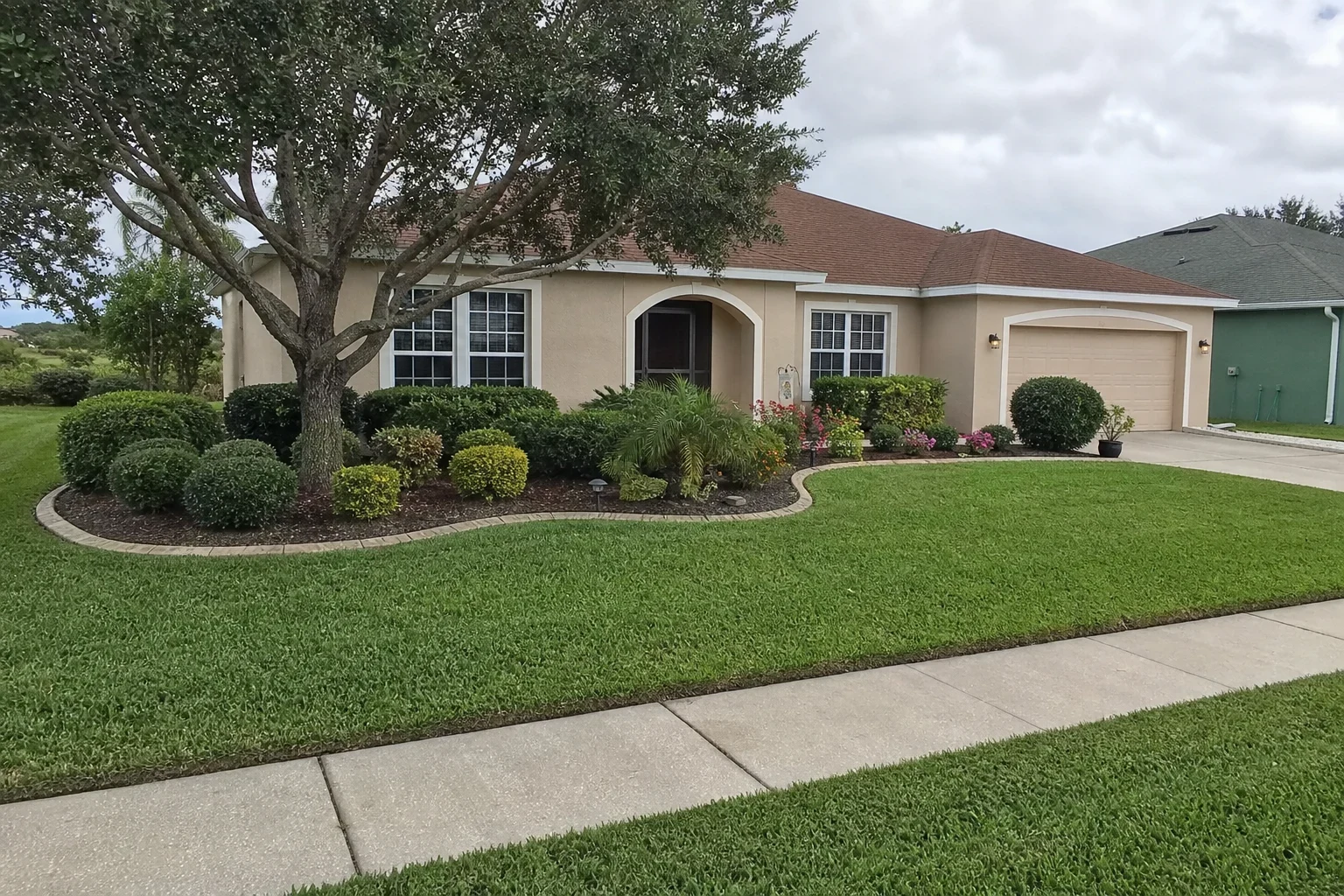
Get Your Yard Reset Before the Next Season
Tell us what the last season left behind, and we will walk the property, note the hazards and give you a clear written scope. The walkthrough and estimate are free.